When a woman reports being sexually assaulted by her Uber driver, the company has a well-worn response. It isn't to accept responsibility. It isn't to investigate and make things right. It is, instead, to put the woman on trial.
Attack her credibility. Pull her personal history into a courtroom. Look for anything, including a mental health diagnosis, a substance use issue, or a complicated past, that might give nine strangers a reason to doubt her. Suggest, without ever quite saying it, that she is lying. For years, that strategy has been central to how Uber defends sexual assault cases, and for a long time it was quiet enough to keep most of those cases out of the public eye.
Two juries in a row have now looked Uber's defense team in the eye and said no.
On April 20, 2026, a federal jury in Charlotte, North Carolina, returned a verdict in favor of Brianna Mensing, a woman who was sexually assaulted by her Uber driver in 2019. It was the second bellwether trial of the more than 3,000 sexual assault and sexual misconduct lawsuits consolidated against the company in federal court. In both trials, Uber's defense was built on discrediting the woman at the plaintiff's table. In both trials, the jury believed the woman anyway.
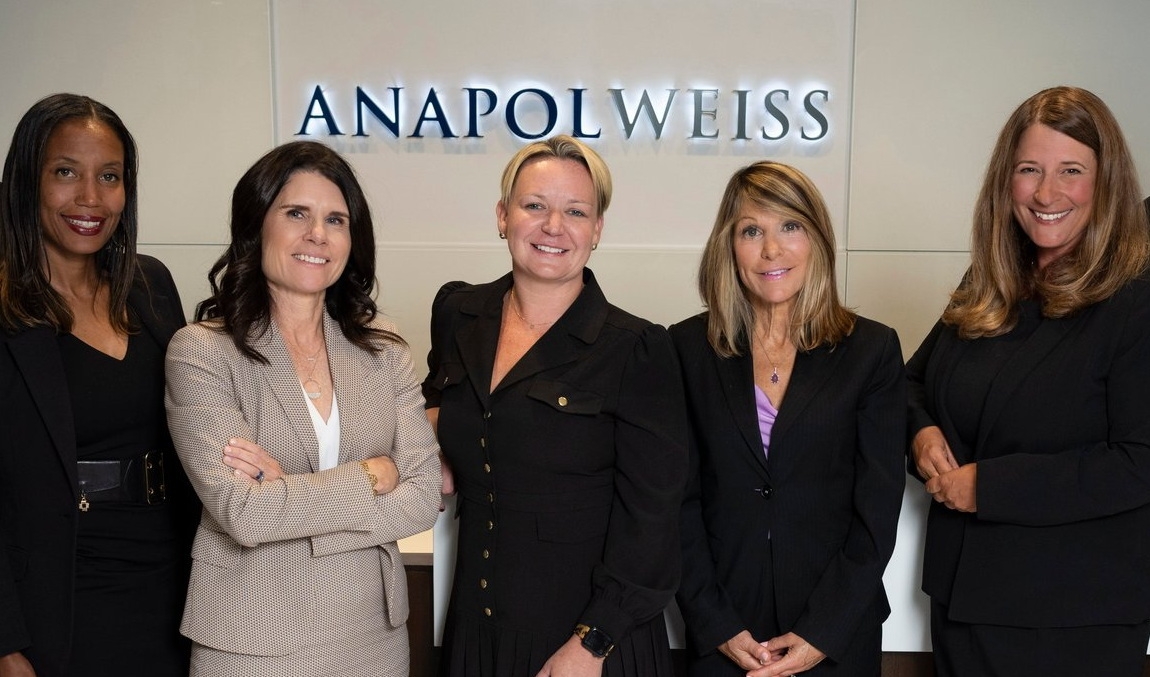
Anapol Weiss served as lead trial counsel in both verdicts. Partner William Smith led the Mensing case to a jury win.
This is what that means for every survivor still waiting for her day in court.
Uber Bellwether Verdict: What Just Happened in the Charlotte Courtroom?
From the jump, Uber's defense in the Mensing case was about Ms. Mensing, not about its driver.
Rather than account for the behavior of the man it had onboarded, dispatched, and paid to drive her home, Uber's legal team went after her. They told the jury that the ride happened during what they called "the height of her drug addiction." They pushed her history in front of nine jurors and asked them to use it as a reason to distrust her. The implicit argument, the one Uber has now run in two bellwethers in a row, was simple: don't believe her.
Here is what Ms. Mensing actually testified to. In March 2019, when she was 23 years old, her Uber driver grabbed her upper, inner thigh at the end of a late-night ride and asked if he could "keep it with him." She reported it. She pursued it. Years later, she told that story again, under oath, in a federal courtroom, while Uber's lawyers worked to make her look unreliable.
After a weeklong trial, the jury returned a verdict in her favor.
The dollar figure was modest, and Uber's spokesperson was quick to try to spin that as a win, saying it "should further bring these cases back to reality." Don't let that frame stick. Uber picked this case as one of its bellwethers. Uber's lawyers believed Ms. Mensing's personal history gave them the best possible conditions to run a credibility defense. Uber built its entire theory around the idea that the jury would side with the company over the woman. The jury didn't. That is the reality this verdict actually brings.To understand what that $5,000 figure actually represents, you have to understand what the jury was allowed to consider. Due to pretrial rulings, the damages in this case were limited to a single 24-hour period, covering the hours from the assault itself through its immediate aftermath. The jury could not award anything for the lasting emotional impact of what happened to Ms. Mensing in the years that followed. Most survivors' cases will not be compressed that way, and in cases where juries can consider the full arc of what a survivor carries forward, a single-day valuation of $5,000 becomes a floor, not a ceiling.
If you or someone you love was assaulted by a rideshare driver, you deserve to know your options. Contact Anapol Weiss today for a free, confidential consultation. There's no pressure, just answers from a team that has now tried and won at the highest level in this litigation.
The Same Playbook, Twice: Dean and Mensing
What happened in Charlotte was not an isolated outcome. It was the second time in two months that a federal jury had rejected the same Uber defense.
In February 2026, an Anapol Weiss trial team led by shareholder Alexandra Walsh secured the first bellwether verdict in the Dean case in Phoenix, where a federal jury awarded $8.5 million to a woman whose Uber driver raped her. In that trial, Uber's defense leaned heavily on attacking the plaintiff's account and her character. The jury rejected it and found for the survivor.
Two months later, in Mensing, Uber ran the same play in a different courtroom, in a different part of the country, against a different plaintiff and lost again.
This is no longer a one-off. It is a pattern, and it belongs to Uber. In both trials, the defense asked the jury to treat the woman as the problem. In both trials, the jury saw through it. For the more than 3,000 survivors still waiting in MDL 3084, that is not an abstraction. It is evidence that the company's core trial strategy (the strategy it has used to intimidate, quiet, and outlast women for years) is failing in front of real jurors.
Stanford Legal Expert Speaks Out: Why Is the Rejection of Uber's Smear Strategy Such a Big Deal?
Professor Nora Freeman Engstrom of Stanford Law School, one of the most respected voices in the country on mass litigation, put it plainly after the verdict:
"This was supposed to be one of Uber's stronger cases. If the company could not persuade a jury here, that sends a powerful signal about the risks it faces going forward."
Think about what that actually means. Uber looked at the full pool of available cases, evaluated the facts, evaluated the plaintiffs, and chose Ms. Mensing specifically. It chose her case because its litigation team believed her personal history would give them room to run the credibility attack they believe in. They did not pick this case in spite of the credibility fight. They picked it because of the credibility fight.
It still didn't work. That is what makes the verdict so consequential.
When a defendant's entire theory of the case is to undermine the woman on the stand, and that theory fails twice in a row, in two different regions of the country, in front of two different juries, the message to the rest of the docket is clear. The smear is not a safe bet anymore. The women still waiting to tell their stories can take some comfort in knowing that juries are showing up prepared to listen and prepared to believe them.
Anapol Weiss in the Uber MDL: Who Has Stood Up to Uber's Attacks on Survivors?


In a federal litigation involving thousands of lawsuits and dozens of plaintiffs' firms, our firm has served as lead trial counsel in both bellwether trials.
Alexandra Walsh led the Dean trial team to the Phoenix verdict in February. William Smith led the Mensing trial team to the Charlotte verdict in April. Anapol Weiss looked nine jurors in the eye, twice, while Uber attacked our client, and walked away with a verdict for the woman.
What William Smith's trial team did in the Mensing case is not abstract. Uber built its defense around Ms. Mensing's history. The company wanted the jury to see a problem plaintiff instead of a woman describing what had been done to her. Beating that takes more than a strong closing; it takes the preparation, composure, and command of the evidence that lets a jury see past the smokescreen and focus on what actually happened in the back seat of that car. That is what happened in Charlotte.
It is the kind of trial advocacy that moves a multidistrict litigation forward not just for one plaintiff, but for thousands of survivors whose cases are still to come. These survivors deserve to be heard without being put on trial themselves.
Uber Bellwether Verdict: What Uber's Second Loss Means for Survivors Going Forward
Two bellwether verdicts do not automatically resolve 3,000 lawsuits. Every plaintiff still has to prove her own case on its own facts. But the trajectory is unmistakable, and it is not about a single legal theory or a single damages award. It is about whether juries are willing to believe the women who come forward.
In Phoenix, they did. In Charlotte, they did. In the case Uber itself picked, with the plaintiff Uber itself believed it could most effectively discredit, the jury still believed her.
That changes the math for every future trial in this MDL. It changes the math for every settlement conversation. And for the women who have been waiting, sometimes for years, to see whether the system will take their word seriously, it is the first concrete evidence that it will.
Brianna Mensing said it in her own words while testifying to the jury: "this is ridiculous that it keeps happening to women." She did not come forward for the money. None of them do. They come forward knowing Uber will try to make them the story, and they do it anyway, because the only way to make the company stop is to make it answer. Verdicts like the ones William Smith and the Anapol Weiss team have now secured are how the legal system says, loudly and on the record, that the smear doesn't work anymore. Believe the women. Answer for what happened to them.
If you were sexually assaulted by an Uber or Lyft driver, time matters, and so does experience. Statutes of limitations vary by state, and some states have recently extended or revived deadlines for sexual assault claims, which is why it is important to speak with an attorney as soon as possible. Anapol Weiss has now been lead trial counsel in both bellwether victories against Uber, and Alexandra Walsh, William Smith, and our team are ready to review your case. Call us at 215-735-1130 or submit our online contact form to schedule a confidential consultation. You won't pay anything unless we win for you.
Disclaimer: This blog is intended for informational purposes only and does not establish an attorney-client relationship. It should not be considered as legal advice. For personalized legal assistance, please consult our team directly.